
The sensor grid already exists. It just can't hear yet.
Cities run thousands of powered, connected poles at the height drones fly, and modern LED luminaires come with a standard sensor socket on top. skyEARS turns that socket into an ear.
Passive
It only listens. No radio emission to spot, and it hears the fibre-optic and autonomous drones that send no signal of their own.
On existing poles
The node twists into the luminaire's Zhaga socket and takes power from it. No new masts, cables or trenches.
Dual use
At night it watches the sky for security. By day the same network maps the city's noise, traffic and emergency vehicles.
From a rotor hum to a track on the map.
The node hears
A small microphone array picks up the rotor hum, classifies the source and measures the direction it comes from. It can tell a drone above the lamp from a car below it.
It sends an event, not audio
Each detection leaves the node as a short event message over the cellular network. Raw sound never leaves the node and is never stored.
The network locates
Directions from neighbouring poles cross into a position and a track. Known aircraft are filtered out, and the track goes to the operator's map and to existing counter-drone systems.
Twist on. Listen.
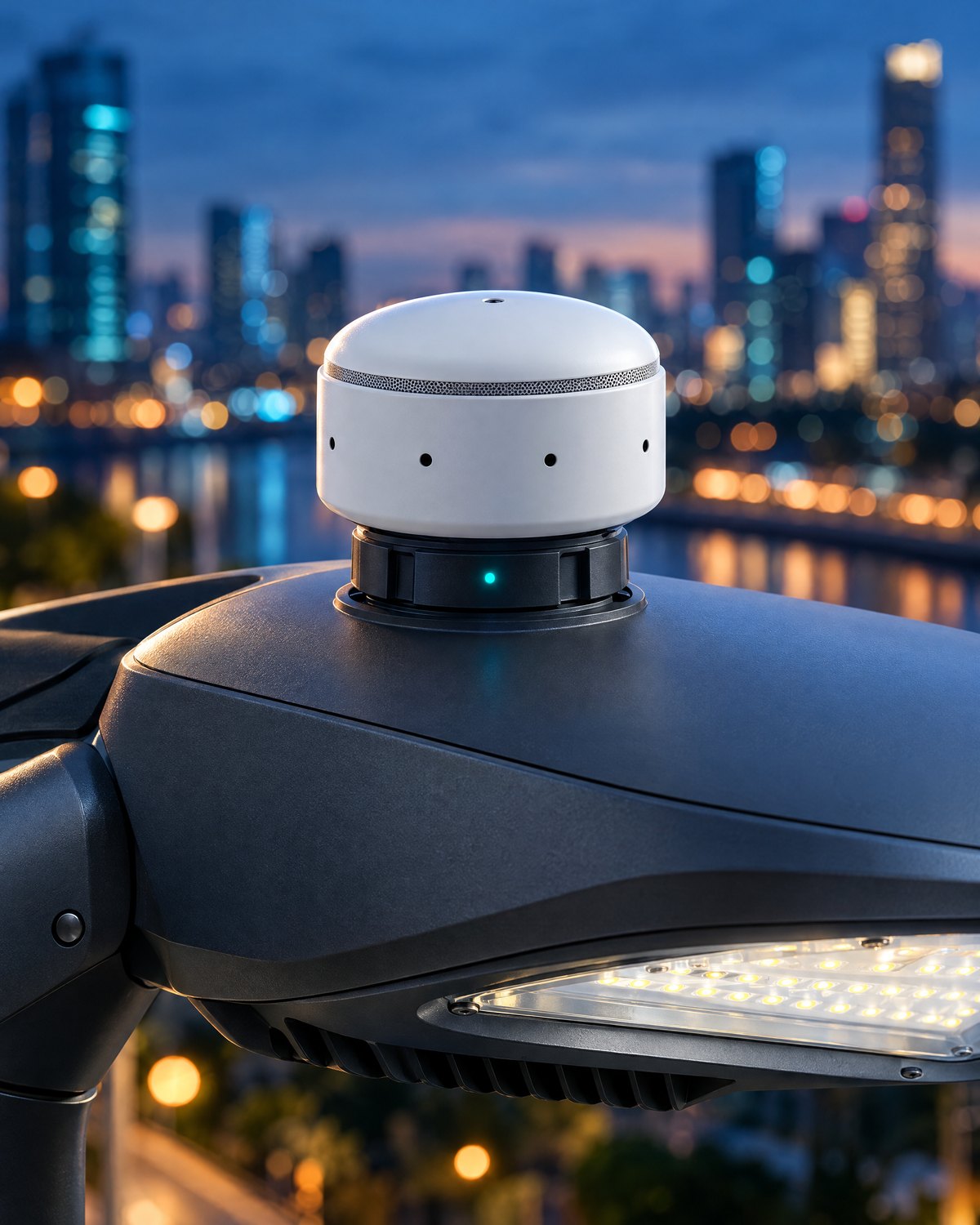
- 1Centre microphone, raised 3 cmSeparates sound from above and below the luminaire.
- 2Acoustic mesh and wind membraneKeeps rain and gusts off the capsules.
- 3Four digital microphonesA small array for finding the direction of a sound.
- 4Status LEDVisible from the street for maintenance crews.
- 5Zhaga Book 18 twist-lockTakes power and data from the luminaire. No tools, no wiring.
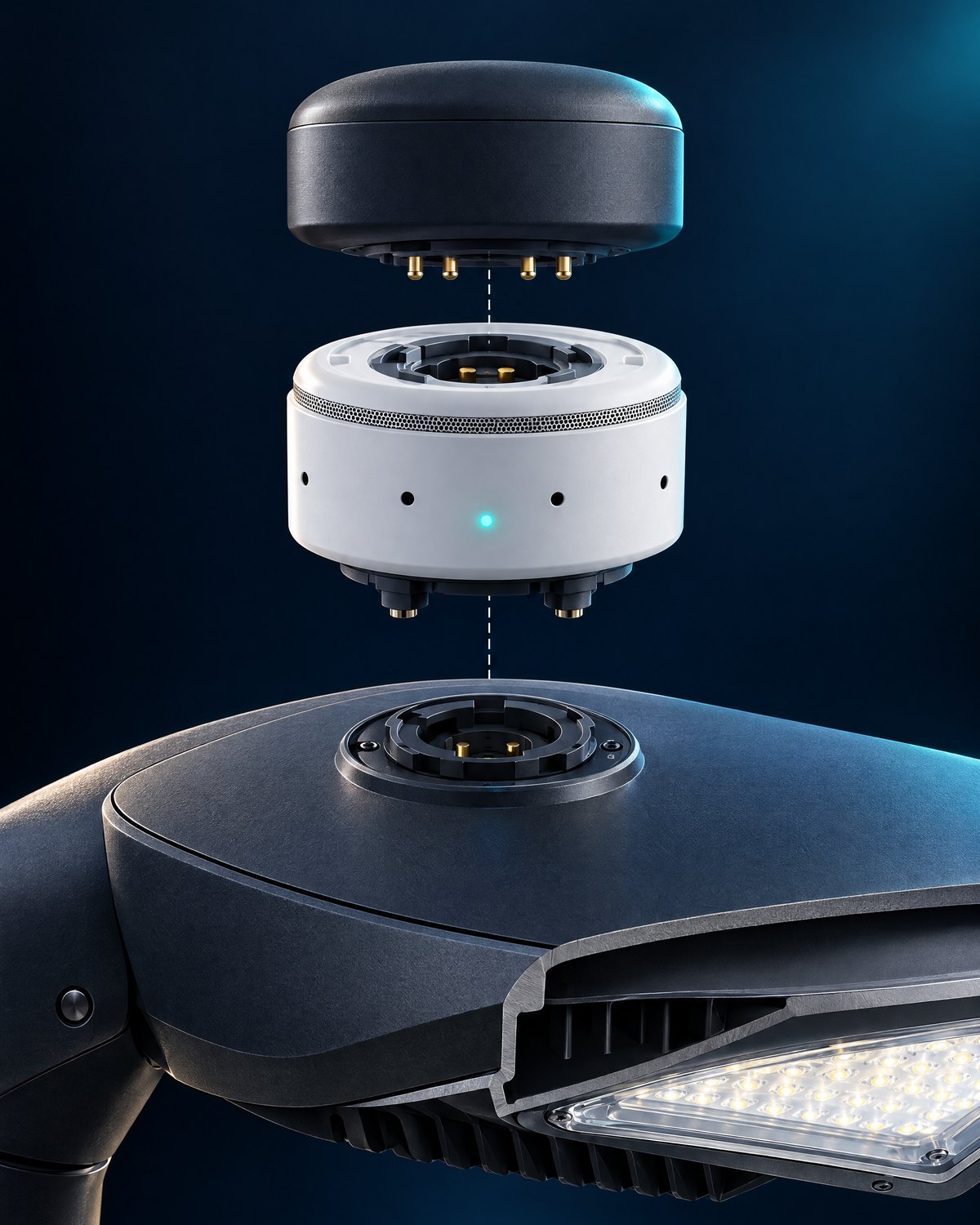
■ SkyEARS pass-through ring
▼ luminaire Zhaga socket
Works with the controller the city already has.
For luminaires with a free Zhaga socket. The node twists in on its own and takes power and data from the driver.
For sockets already taken by a lighting controller. The ring plugs into the luminaire and gives the same Zhaga socket back on top, so the existing controller from any vendor twists onto it unchanged. Power and DALI pass straight through, and the lighting system keeps working as before.
One network. Two pictures of the city.
The same nodes feed a security picture of what flies over the city and a civic picture of how loud and busy its streets are.

What flies over the city
- Detects drones with no radio emission
- Early cueing for radar, cameras and effectors
- GNSS-jamming map from every node's receiver
- Tamper alerts when a pole is hit
- Feeds existing counter-drone systems
How the streets sound
- Noise maps from measurement, not modelling
- Traffic counts and vehicle classes, no cameras
- Crashes and illegally loud vehicles
- Motion-adaptive lighting that cuts energy bills
A clear road for the ambulance
- Hears the siren pole by pole and follows the vehicle
- Tells the traffic system which junction it reaches next
- Lights turn green before it arrives
Audio never leaves the node
- Sound is analysed on the node and discarded. Only events are sent.
- Data protection impact assessment before every pilot
- Secure boot and signed over-the-air updates
- Designed for the EU Cyber Resilience Act
Where we are
- DONEMicrophone array with real-time direction finding
- DONECellular gateway on a streetlight controller, working end to end
- DONEField tests in Wrocław, with live air traffic as ground truth
- NEXTPilot on a handful of poles, day and night
- THENProduction node, pass-through ring and a first city deployment
Talk to us about a pilot.
We are looking for cities, lighting operators and security partners for the first pilots on real poles. Tell us where, and we will tell you what the network would hear.